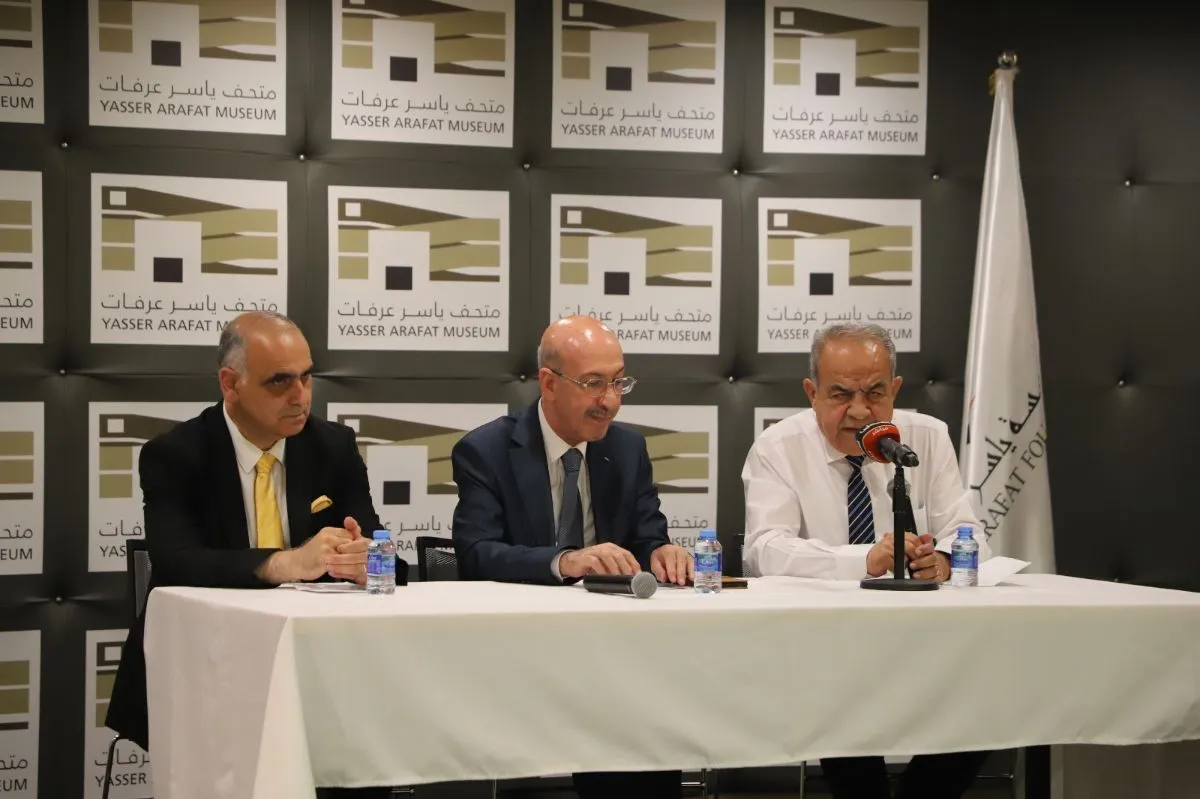
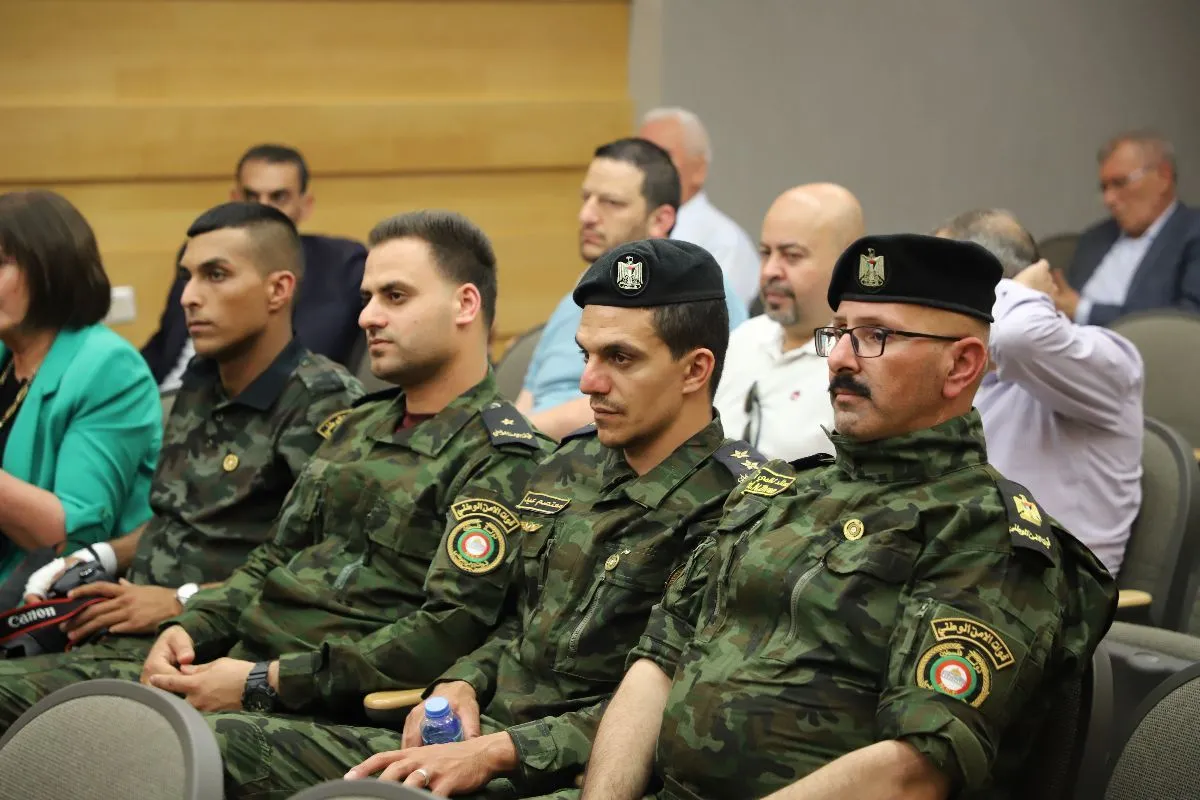
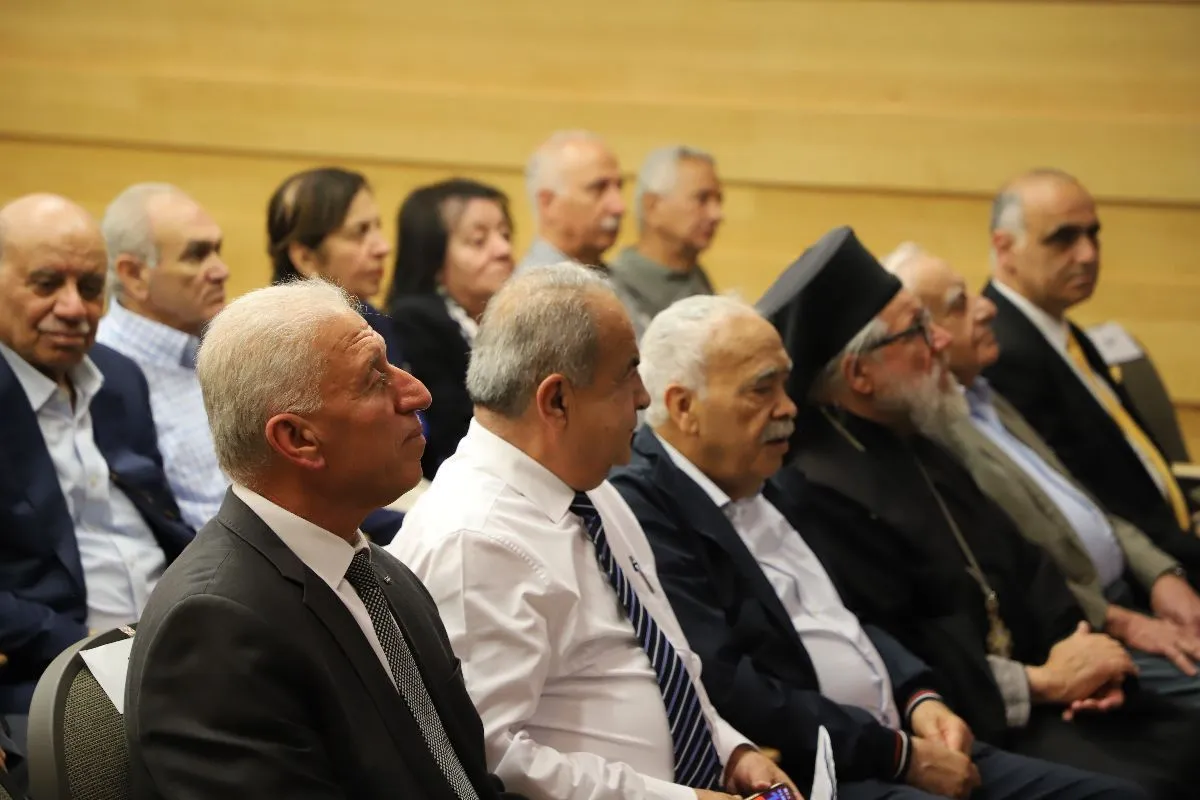
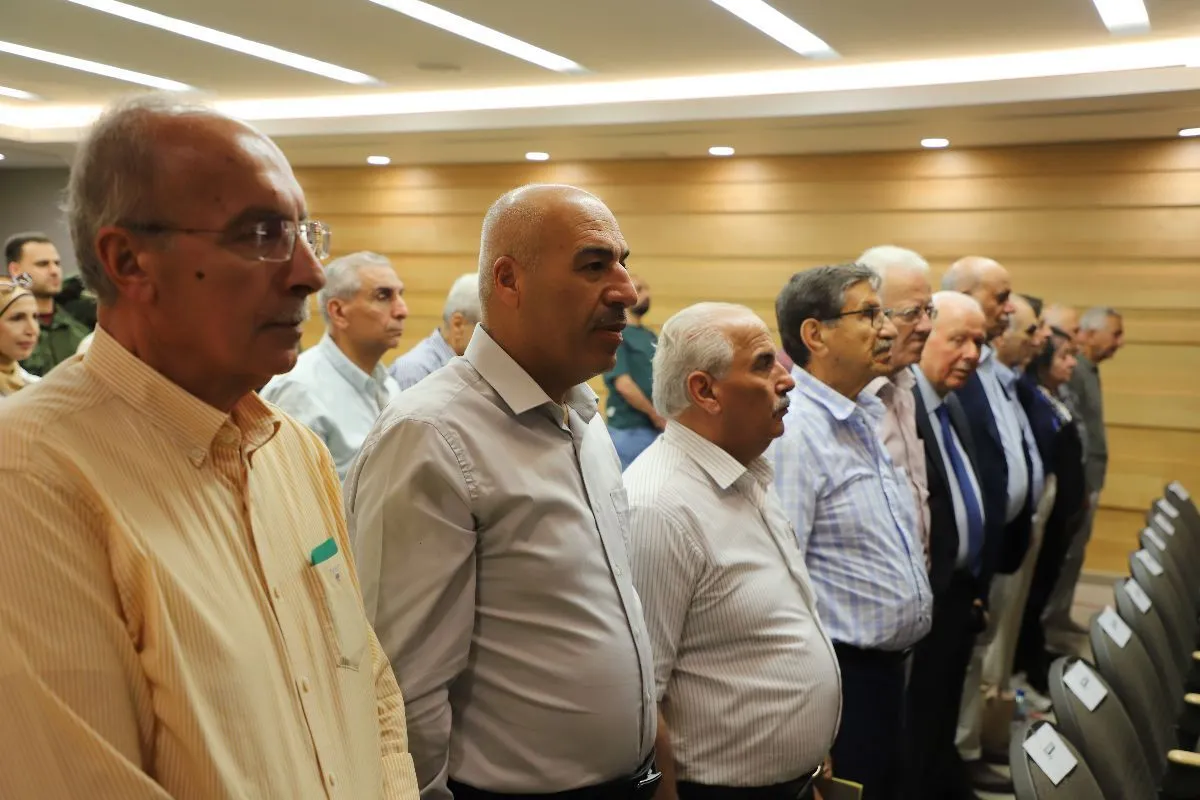
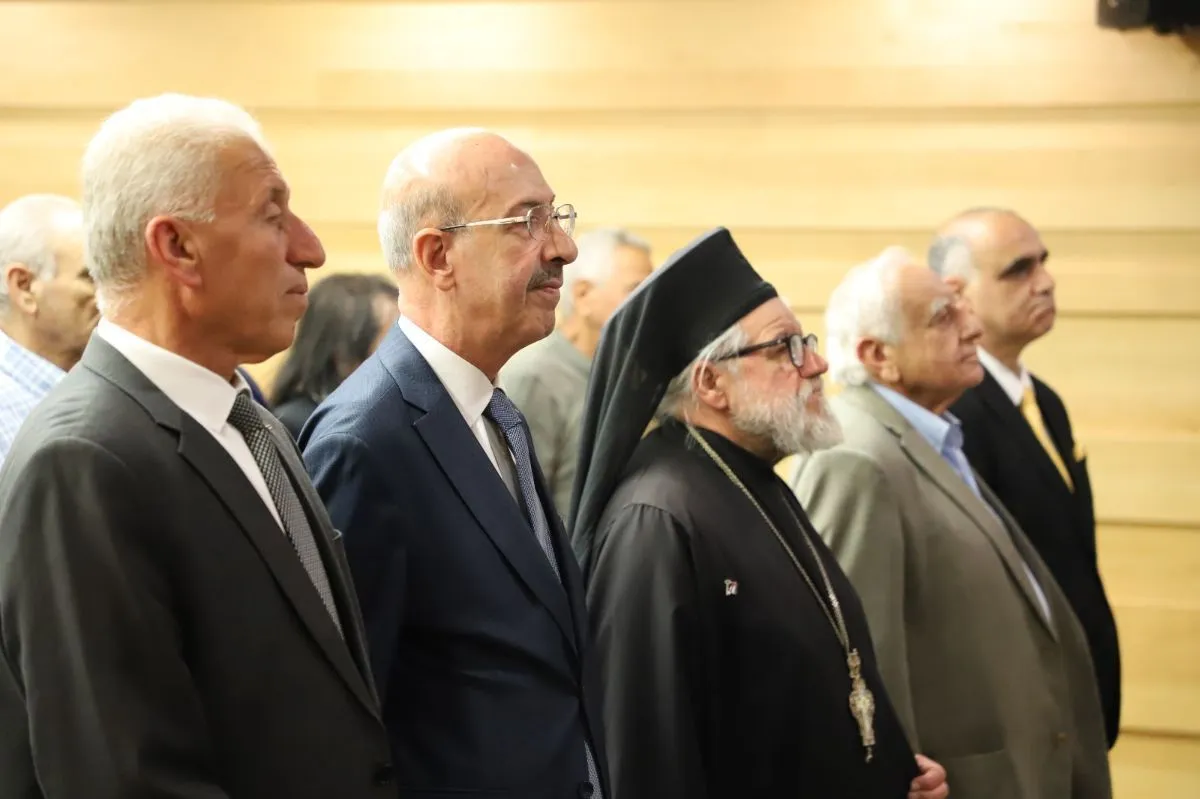
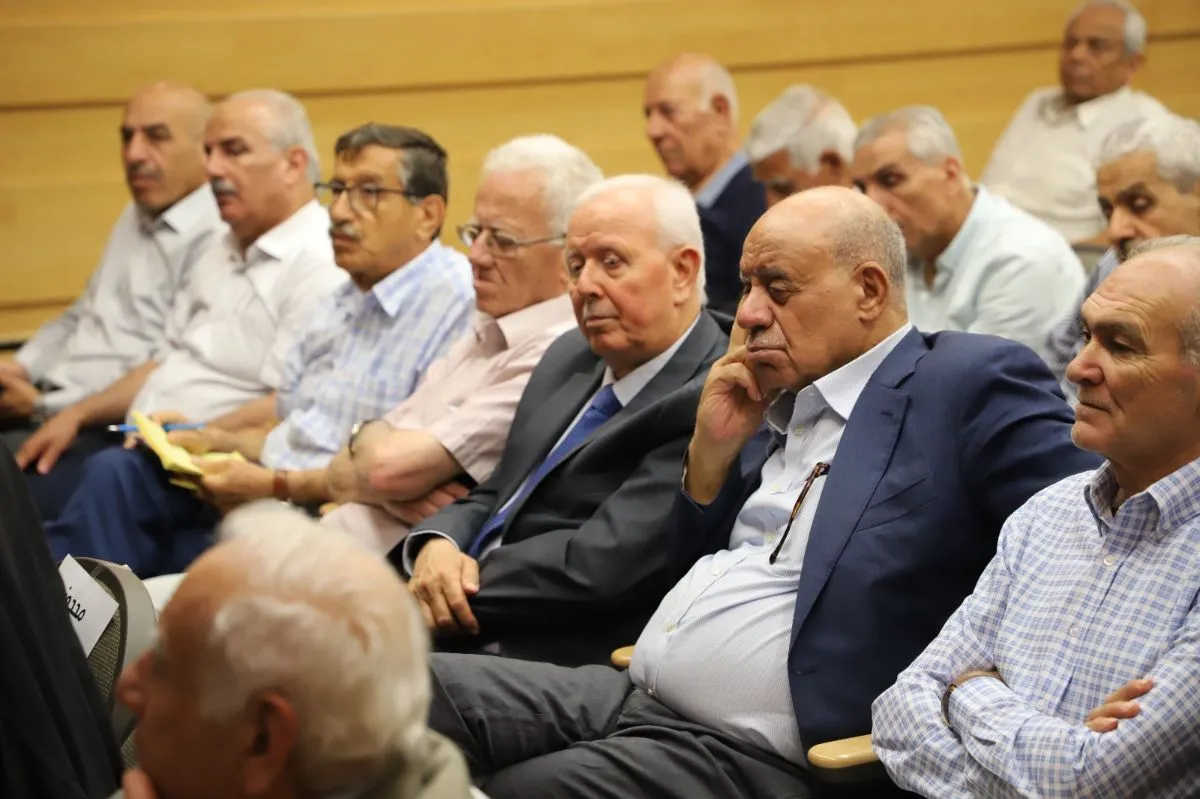
The Yasser Arafat Foundation held a panel discussion titled "The Israeli Occupation Elections: Prospects for Change and Their Implications for Us" on Tuesday, 30 June 2026, at Al-Muntada Hall of the Yasser Arafat Museum. The event was attended by members of Fatah's Central Committee and Revolutionary Council, alongside public figures, writers, academics, and civil society activists.
The seminar featured Dr. Nazir Majli, a Palestinian writer and researcher specializing in Israeli affairs; Wadie Abunassar, Director of the International Consultants Center and Honorary Consul of Spain in Haifa; and Dr. Ahmad Soboh, Chairman of the Board of the Yasser Arafat Foundation.
In his opening remarks, Dr. Soboh explained that the seminar aimed to provide deeper insight into the upcoming Israeli elections, as well as the U.S. midterm elections, noting that the outcomes of both are expected to have direct implications for the Palestinian people. He stressed that a realistic assessment of political developments is essential to advancing the Palestinian cause.
He added that Palestinians remain committed to employing all available political, legal, and legitimate means of struggle, foremost among them steadfastness on the ground and engagement with international legal mechanisms, to ensure that the Palestinian cause remains firmly on the international agenda. He further emphasized that sustaining international support requires strengthening Palestinian national unity across the West Bank, the Gaza Strip, Jerusalem, and the Palestinian communities inside Israel.
Dr. Nazir Majli stated that while Israeli elections undoubtedly influence the Palestinian cause in both temporal and political terms, the core of the conflict remains unchanged regardless of which government comes to power. He argued that Israel is experiencing decline across multiple sectors—including politics, the economy, society, and education—while corruption has become increasingly entrenched within state institutions. He noted that several cabinet ministers are currently facing corruption-related legal proceedings amid what he described as a deepening internal crisis fueled by the policies of the current government.
Majli further observed that personal political considerations continue to shape Israeli elections, arguing that Prime Minister Benjamin Netanyahu's overriding objective is to remain in office, while opposition parties are primarily focused on replacing him without presenting a significantly different political alternative. He suggested that Netanyahu has consistently leveraged political and regional developments to consolidate his position and extend his tenure.
He also pointed out that the Israeli right remains the country's dominant political force and called on Palestinian citizens of Israel to pursue parallel strategies of grassroots engagement and political participation to strengthen their influence. He stressed the importance of maintaining hope, remaining committed to the national cause, and preparing for future challenges, adding that the formation of a unified Arab electoral list would reinforce Palestinian unity within the 1948 territories and increase Arab political influence in Israel.
For his part, Wadie Abunassar underscored the importance of strengthening Arab unity to prevent Palestinians from becoming passive recipients of political realities imposed by others. He argued that genuine political strength lies in internal cohesion and in preserving the ability to make independent national decisions.
Abunassar outlined three principal approaches to understanding systems of governance—class-based, pluralist, and elite-centered—and encouraged participants to apply these analytical frameworks when assessing the upcoming Israeli elections. He also emphasized the need for Arab leadership characterized by wisdom, courage, and integrity in confronting what he described as Israeli government policies aimed at undermining the Palestinian cause, displacing Palestinians, and fostering despair within Palestinian society.
He further stressed the importance of Palestinian citizens of Israel exercising their democratic right to elect representatives capable of influencing the formation of future governments. He argued that the election results could shape the trajectory of Israel's political project in the region, while emphasizing that Palestinians and the broader Arab world also bear responsibility for maximizing any opportunities that may emerge.
Abunassar concluded by highlighting the importance of greater coordination among all components of Palestinian society and of pursuing a clear strategic vision that minimizes losses while maximizing national gains. He noted that smaller political parties frequently play decisive roles in forming Israeli coalition governments, that the Israeli left remains present despite its diminished influence, and that U.S. President Donald Trump is likely to be an influential factor in the upcoming Israeli elections.
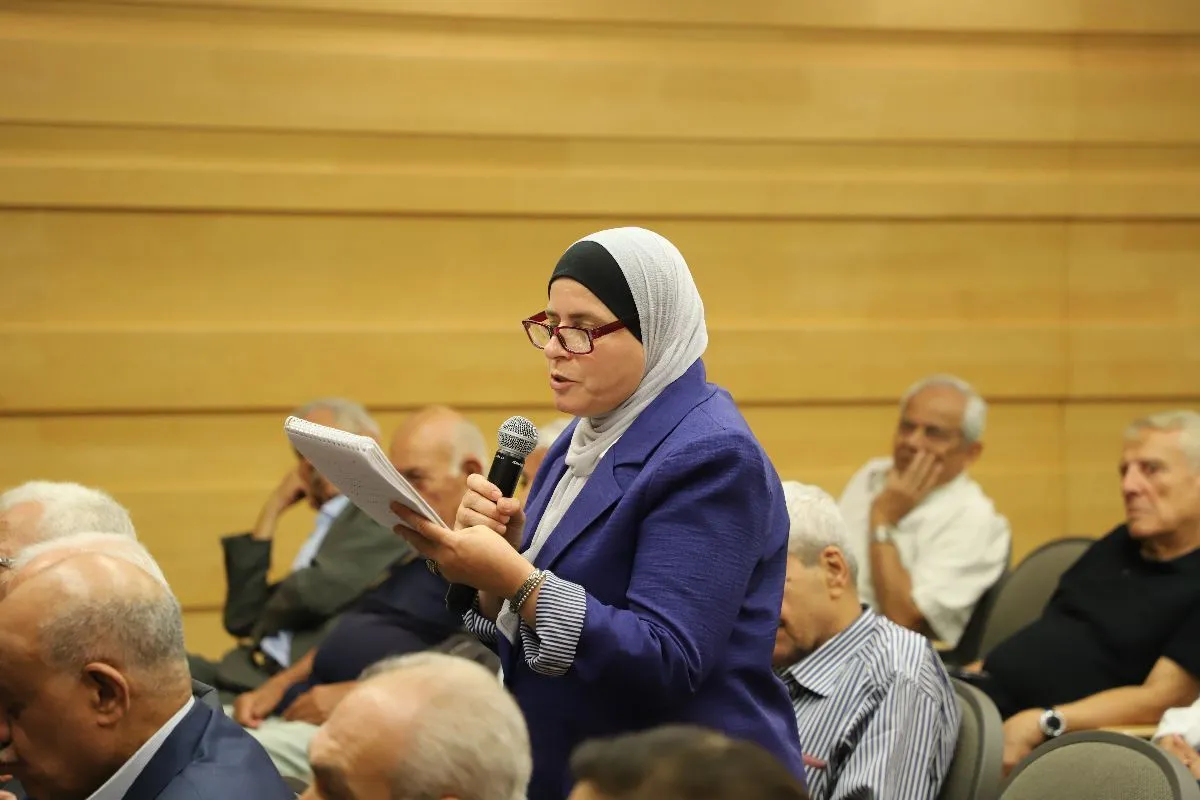
The seminar concluded with an open discussion, during which participants exchanged views and engaged with the speakers on questions related to Israel's evolving political landscape and its implications for the Palestinian cause.